

Back in June 2025, we wrote about urea volatility and the role biological inputs could play in reducing reliance on synthetic fertiliser.
Less than a year on, that conversation has shifted from “emerging risk” to current reality.
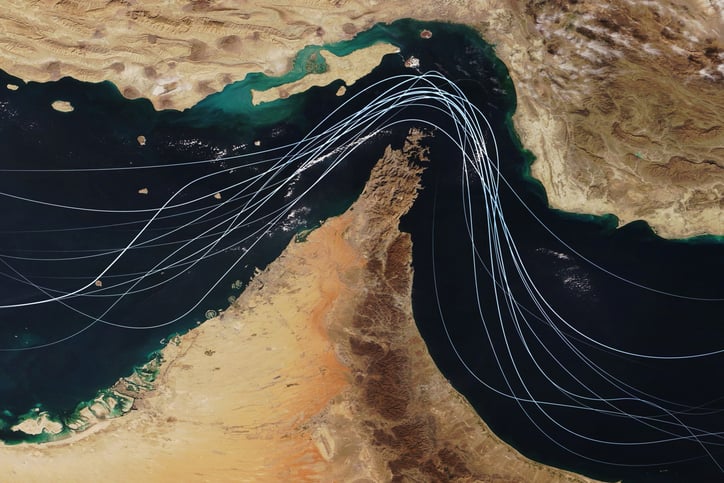
Ongoing conflict in the Middle East - particularly disruption through the Strait of Hormuz - is now materially affecting global fertiliser and fuel supply. That matters because:
- Around one-third of global fertiliser trade moves through that corridor
- Shipping disruption has cut flows of both fertiliser and natural gas (a key input for nitrogen fertiliser production)
- Prices for nitrogen fertilisers like urea have risen sharply, in some cases by tens of percent within weeks
At the same time, fuel costs are climbing - compounding the cost of producing, transporting, and applying fertiliser.
This isn’t just a price issue. It’s a systems issue.
Why nitrogen is particularly exposed
Nitrogen fertiliser (like urea) is tightly linked to energy markets.
- It’s produced using the Haber–Bosch process, which relies heavily on natural gas
- Energy can make up up to 70% of production costs
- Disruptions to gas supply or shipping quickly flow through to fertiliser availability and price
That’s why global events - whether it’s war, gas shortages, or export restrictions - tend to hit nitrogen hardest.
The knock-on effect is already visible globally:
- Farmers reducing fertiliser use due to cost
- Shifting to lower-input crops
- Accepting potential yield reductions in some cases
What this means on-farm
For most New Zealand farmers, the challenge isn’t whether to use fertiliser, it’s how to use it more efficiently under pressure.
When inputs become expensive or uncertain, there are only a few levers available:
- Apply less (risking production)
- Pay more (impacting margins)
- Or improve how effectively nutrients are used
That third option is where soil condition and biology start to matter more.
Where soil conditioners and biostimulants fit
There’s been growing interest in soil conditioners and biological products but it’s worth being clear about what they can and can’t do.
They are not direct substitutes for fertiliser. Most don’t supply nutrients in the same quantities.
Based on a growing body of research, what they can do is support the efficiency of nutrient use by influencing:
- Soil structure and water holding capacity
- Microbial activity and nutrient cycling
- Root development and plant uptake
Different products approach this in different ways.
A practical look at some of the options
Compost
Adds organic matter and improves soil structure and moisture retention.
Well supported by research for long-term soil health but nutrient release is slow, and large volumes are typically required to shift fertility.
Humates (humic & fulvic substances)
Can improve nutrient availability and root growth in some systems.
Evidence shows variable responses depending on soil type, crop, and existing organic matter levels, so results aren’t always consistent.
Seaweed extracts
Often used to support plant stress tolerance (e.g. drought or cold).
Generally act more as plant biostimulants than soil builders.
Microbial inoculants
Introduce specific beneficial microbes.
Can be effective in controlled conditions, but field performance can be inconsistent - particularly where soils already contain established microbial communities.
Vermicast (worm castings)
Vermicast is positioned slightly differently because it combines:
- Organic matter
- Plant-available nutrients
- A diverse microbial population
Peer-reviewed studies have shown vermicast can:
- Improve soil microbial activity
- Increase nutrient availability (particularly nitrogen and phosphorus)
- Enhance plant growth under certain conditions
However, responses vary depending on soil type, climate, and application rate - as with any input.
Linking back to fertiliser efficiency
The key point isn’t that biological inputs replace fertiliser.
It’s that they can influence how efficiently fertiliser performs in the system.
Mechanisms that are supported in the literature include:
- Reduced nutrient losses (through improved soil structure and microbial immobilisation)
- Improved uptake (via root development and rhizosphere activity)
- More gradual nutrient release from organic matter pools
In practical terms, that can mean:
- Maintaining production with lower inputs over time
- Or improving return on fertiliser already being applied
But outcomes are system-dependent and should be validated on-farm where possible.
Where this leaves us
The key takeaway from the past 12 months is that fertiliser supply and pricing are no longer stable background assumptions.
They are strategic risks.
Even if supply improves in the short term, the underlying drivers - energy dependence, geopolitics, and global trade concentration - aren’t going away.
So the question isn’t whether to use fertiliser.
It’s how to build systems that are:
- Less exposed to supply shocks
- More efficient with nutrients
- And more resilient under pressure
Biological inputs - including vermicast - won’t solve that on their own.
But as part of a wider approach, they are increasingly being considered - not as a replacement, but as a way to get more from what’s already being applied.
If you'd like to try vermicast to get more out of your fertiliser get in touch - we'd love to hear from you.